Monday, September 15, 2014

MongoDB-Next generation of database


I recently got a chance to work, or rather tinker/play with a document database, MongoDB which is a next generation of database. The cool think about this database is that it does not follow traditional methods of storing data, which is in the form of tables/records and fields. That's why MongoDB is also known as NoSql database.

What is NOSQL database?

NoSQL, or 'Not Only SQL', represents the new class of data management technologies designed to meet the increasing volume, velocity, and variety of data that organizations are storing, processing, and analyzing.

Compared to relational databases, NoSQL databases are more scalable and provide superior performance. NoSQL databases address the opportunities that the relational model does not, including:

  • Large volumes of structured, semi-structured and unstructured data
  • Agile sprints, quick iteration, and frequent code pushes
  • Flexible, easy to use object-oriented programming
  • Efficient, scale-out architecture instead of expensive, monolithic architecture


Document Databases

When relational databases were introduced into the 1970s, data schemas were fairly simple and straightforward, and it made sense to conceive objects as sets of relationships. For example, an article object might be related to a category (an object), a tag (another object), a comment (another object), and so on.

Because relationships between different types of data were specified in the database schema, these relational databases could be queried with a standard Structured Query Language, or SQL. But the environment for data, as well as programming, has changed since the development of the SQL database:

The emergence of cloud computing has brought deployment and storage costs down dramatically, but only if data can be spread across multiple servers easily without disruption. In a complex SQL database, this is difficult because many queries require multiple large tables to be joined together to provide a response. Executing distributed joins is a very complex problem in relational databases.

The need to store unstructured data, such as social media posts and multimedia, has grown rapidly. SQL databases are extremely efficient at storing structured information, and workarounds or compromises are necessary for storing and querying unstructured data.

Agile development methods mean that the database schema needs to change rapidly as demands evolve. SQL databases require their structure to be specified in advance, which means any changes to the information schema require time-consuming ALTER statements to be run on a table.

In response to these changes, new ways of storing data (e.g. NoSQL databases) have emerged that allow data to be grouped together more naturally and logically, and that loosen the restrictions on database schema. One of the most popular ways of storing data is a document data model, where each record and its associated data is thought of as a “document”. In a document database, such as MongoDB, everything related to a database object is encapsulated together. Storing data in this way has the following advantages:

  • Documents are independent units which makes performance better (related data is read contiguously off disk) and makes it easier to distribute data across multiple servers while preserving its locality.
  • Application logic is easier to write. You don’t have to translate between objects in your application and SQL queries, you can just turn the object model directly into a document.
  • Unstructured data can be stored easily, since a document contains whatever keys and values the application logic requires. In addition, costly migrations are avoided since the database does not need to know its information schema in advance.
  • Document databases generally have very powerful query engines and indexing features that make it easy and fast to execute many different optimized queries. The strength of a document database’s query language is an important differentiator between these databases.


MongoDB:

MongoDB (from "humongous") is an open-source document database, and the leading NoSQL database. Written in C++, MongoDB features:

Document-Oriented Storage »
JSON-style documents with dynamic schemas offer simplicity and power.

Full Index Support »
Index on any attribute, just like you're used to.

Replication & High Availability »
Mirror across LANs and WANs for scale and peace of mind.

Auto-Sharding »
Scale horizontally without compromising functionality.

Querying »
Rich, document-based queries.

Fast In-Place Updates »
Atomic modifiers for contention-free performance.

Map/Reduce »
Flexible aggregation and data processing.

GridFS »
Store files of any size without complicating your stack.

MongoDB Management Service »
Monitoring and backup designed for MongoDB.

Partner with MongoDB »
Reduce cost, accelerate time to market, and mitigate risk with proactive support and enterprise-grade capabilities.

In the next post, I will write about installation, some basic commands and how to write a file using one of the popular package available in Python Prgoraming Language.

Saturday, September 13, 2014

Probability and the problem of plenty

Hi,

I am writing an off beat thought here, and want to deal with a mathematical technique called probability, which means chance in a layman's language and the problem of plenty, which again means, many in a layman's language.

Before, all of you even start guessing that  about what I am going to talk, I will clarify, the problem of plenty is about applying to job positions in the multinational corporations.

Now, don't get me wrong. I have absolutely nothing against the corporations, and also, the way people, especially Indians think. This is just a thought which came to my mind while searching for new jobs.

To begin with, I will explain about probability, please don't get scared, as I am not going to cover the nitty-gritty of this subject, which itself is a paradox, and I believe that the probability that probability understands itself is zero. Now, the definition of probability from wikipedia:

'Probability is used to quantify an attitude of mind towards some proposition of whose truth we are not certain.[2] The proposition of interest is usually of the form "Will a specific event occur?" The attitude of mind is of the form "How certain are we that the event will occur?" The certainty we adopt can be described in terms of a numerical measure and this number, between 0 and 1 (where 0 indicates impossibility and 1 indicates certainty), we call probability.[3] Thus the higher the probability of an event, the more certain we are that the event will occur. A simple example would be the toss of a fair coin. Since the 2 outcomes are deemed equiprobable, the probability of "heads" equals the probability of "tails" and each probability is 1/2 or equivalently a 50% chance of either "heads" or "tails". '


Scared? Confused? Ha ha, don't worry, as I have said, that probability that probability understands itself is zero. I will tell you the most simplest of the thing about probability while dealing with this paradox : "PROBABILITY WILL NEVER BE LESS THAN ZERO AND GREATER THAN ONE".

Just keep zero and one in mind, and your life will be easy, whatever outcomes we obtain from the total number of universal set is probability.

So suppose, I have two coins, and coins have HEADS AND TAILS ,so

Total number of the Event E = {2}, as heads and tails

Sample count of  Heads in a 'FAIR' coin H = {1}

Sample count of  Tails in a 'FAIR' coin T = {1}

Probability of obtaining HEAD while a 'FAIR' coin is flipped P{H | E} = 1/2 = 50%

I guess this is sufficient.

Ahh, now the original matter. While I have been applying for new positions for my job search, which I guess is considered very normal for an IT guy of India, in order to increase my package, I started thinking on this that people 'ADVISE', which is another 'INDIAN' trait, me to keep on applying and then you will get through. So keep on applying here means that I must keep on posting my portfolio or resume to various companies, and then, I will get short-listed by them, and then they will follow an algorithmic procedure to hire me.

Wait, you will tell me that what's so wrong with it, that it made me to write a blog, that too, using a topic like probability. I will say, why not apply probability to give a proof that applying profiles to hoards of companies to seek out employment actually reduces our chances of getting an employment.

Yes, you have read it RIGHT, the more we will apply to companies, the more it will reduce our employability chance.

How?

Now, consider a case, I apply to one company, so my chances  of getting entry into that company or organization will be 1, as there is only one sample event and one event which will occur, so it is 100%, similarly, chances of not getting into that organization will be zero, which I guess is fair.

I apply to two companies, so chances of getting call of an interview is (1/2), chances of not getting an interview call (1/2) as in probability, the sum of the outcomes is always 1.

This gives rise to interesting cases now. I have got a call of interview, I will do research about that firm, could be possible that I like it and I decide to attend the interivew.

So chances of all those three outcomes would be (1/3) * (1/3) * (1/3), and this is out of the 50% of the chances, so overall probability (1/2) * (1/27) = (1/54).

Probability of not happening this would be 1- 1/54 = 53/54 almost equal to 1.

                                                                     53/54 > 1/54.


We can clearly see that the chances of getting selected in an organization decreases as we apply to more firms. If the situation is getting out of control by applying to two firms, then imagine what would be the result if we apply for jobs to more than 10 firms.

But Indians keep on applying for jobs in the portals thinking that more the application, more the chances of getting selected.

This was just an attempt on my side of trying to prove a hypothesis which I had thought off, and could be possible that I may be wrong.

Happy Reading!


FizzBuzz Program to test developers


This is not to be-little anyone, but since I am a Software Engineer and also love writing code, hence I get disheartened and feel sad when I find the truth. I do know it. And also, this has nothing in relation with India IT people because this thing holds true for all the software engineers across the world.

I recently came across a blog post which mentions about the horror that coders cannot program.

And what more, the real problem is that coders cannot write simple program.

What's the simple program which majority of the developers struggle to write?

The "Fizz-Buzz test" is an interview question designed to help filter out the 99.5% of programming job candidates who can't seem to program their way out of a wet paper bag. The text of the programming assignment is as follows:
"Write a program that prints the numbers from 1 to 100. But for multiples of three print “Fizz” instead of the number and for the multiples of five print “Buzz”. For numbers which are multiples of both three and five print “FizzBuzz”."

It took me 5 minutes to figure out this program.

In fact, those who consider this test as easy and a piece of cake, would reflect negative thought that how do they view the work of coding and the development/engineering a software

But why is it so hard?

Before trying to describe that why is it so hard, here's the solution, it is not a scale able though

>>> def FizzBuzz():
...     for i in range(1,100):
...             if (i%3 == 0 and i%5==0): print("FizzBuzz")
...             elif(i%3==0): print("Fizz")
...             elif(i%5==0): print("Buzz")
...             else: print(i)


I have used windows 8 environment. Python must be installed for this.

Now call the FizzBuzz() function from the python interpreter.

The above solution works as we intend to.

As I have mentioned above, many programmers/coders struggle to write this simple program?

What could be the reason?

As a professional programmer, I have realized that many software engineers develop software which involves calling libraries, routines, data processing languages SQL etc. The usage of loops, recursion, solving a problem by designing an algorithm,  using an existing algorithm such as linked list, trees, etc does not happen in the majority of the software development. Barring the biggies, the rest of the software development is either writing an app by calling libraries or customizing ERP package. And we know how dead an ERP application is, it involves zilch amount of technical knowledge.

The only way to improve as a programmer is to write code consistently.  It is not writing code for a day, then coming back to touch it after a week. No art/craft or for that matter, no subject cannot be mastered without practicing, and it is the perfect practice which is required. Yes, in the beginning write code which sucks, then tinker with it, then learn the materials, hit the documents, ask people, but practice the art of coding.

Unfortunately, coding is termed as a dirty job and if things go wrong, then the coders are blamed first. But why is the situation so horrible? Because the bosses of the software industry knows the language of the business and don't know anything about the technology world. Their only viewpoint about technology is that this particular piece of package software is hot, let us put resources on this and mint money. And by the time the technology becomes obsolete, the bosses would have extracted wealth from the resources whose skills becomes outdated in this fast paced technology world. 

Coders must stand up now and fight for their rights. It is coders who bring good things in the IT world. Until and unless coders will de-value themselves, they will always be ruled by the bosses who cannot write 'FizzBuzz' program.

P.S.: If you are a Software Developer/Engineer and stumble upon this post, I will request to solve this FizzBuzz problem. Be honest with yourself, do not look or cram the solutions, and just do an introspect about ourselves, because, even good software engineers do struggle on this. 


Saturday, June 28, 2014

Shorlisted for S P Jain's PGPM Interview


So as they say, good things do come to everyone, and these things happen by chance.

It has been 9 years that I have written an examination and cleared, by examination, I mean, an all India level entrance examination of a premier institute. I had written entrances of the FMS  and XAT for their MBA program, but did not meet success.

But then, chance again comes into the picture. And how did this happen?

By chance, I happened to see the S P JAIN PGPM email ad.

What is S P JAIN?

n the country. Since its inauguration in 1981 by the then British Prime Minister the Rt. Hon’able Margaret Thatcher, it has been consistently recognized as one of the top 10 business schools in India.
SPJIMR grew rapidly in eminence from one of the three B-schools in Mumbai in 1981 to one of the top ten B-schools in the country by 1994-1995. The bold move to disaffiliate SPJIMR from the then Bombay University to have freedom in course curriculum, pedagogic innovations and pioneering programmers in socially under managed sectors was a beginning of its journey to achieve the mandate it has given itself in terms of unique innovative and distinct path in management education. The institute has an enviable track record of recognizing the needs of society, especially the under managed sectors, and responding with quick and appropriate responses.
SPJIMR's growth is based on the commitment to diversify into socially relevant segments and activities that are not adequately addressed at societal level, and accordingly impart the requisite management education.
In order to make the management education more effective, SPJIMR took the following action-
  1. Structured architecture to respond to the development and administration of programs socially relevant to specific segments
  2. Developed pedagogic innovations, which are the strategic strength of the institute, to suit specific needs of each segment
  3. Ensured attention to the traditional individual areas such as Marketing, Finance Operations and Information Management
Mission Statement of S P JAIN:

Our mission is to influence practice and promote value-based growth. Our students will recognize, understand, and uphold the social relevance of business decisions, including within the underserved sections of society.

Yes, I applied for PGPM course, which is a very respected course now a day, and my profile got short listed.

What is PGPM COURSE?

"Recognizing the need of the industry for thought leaders in middle level management, SPJIMR has successfully endeavoured to create the Postgraduate Program in Management (PGPM) now in its ninth year. It is a 15-month full-time programme with 3 months of web learning and 12 months of campus learning offered by SPJIMR for participants with a minimum 5 years of work experience. As a career accelerator, the programme leverages on the participants’ past experiences and aims to create and nurture value-based future leaders to take on higher management roles. The unique aspect of the programme is the focus on the specific Role and Domain that the participant is interested to pursue. The customized approach ensures A) Contextually specific role and domain focus ; B) Functionally integrated teaching-learning process ."

This is a course which is very rigorous in nature, and if someone's profile gets shortlisted, then, they do deserve a pat on their back. I know that people will say that you have received a call because you have worked in the industry for more than 5  years, but I know that many people have got rejections. 

Currently, I am down and out in my career, and this type of incident, irrespective of the result, will definitely boost my career and shape up my personality.

So going forward, I will be fully occupied with the preparation for the interview which is scheduled on 25th of july 2014 in mumbai. In the meantime, I also need to focus on my GMAT examination, as I need to submit my score before 15th aug 2014, via the official GMAC report. 


Monday, May 26, 2014

Learning Hadoop

Hello,

So me and my younger brother have started to tinker around with this new tool called "HADOOP".

Now, what's HADOOP:

"Hadoop was created by Doug Cutting and Mike Cafarella[5] in 2005. Cutting, who was working at Yahoo! at the time,[6] named it after his son's toy elephant.[7] It was originally developed to support distribution for the Nutch search engine project.[8]"

So what was the problem which gave birth to Hadoop?

"Doug Cutting, Cloudera's Chief Architect, helped create Apache Hadoop out of necessity as data from the web exploded, and grew far beyond the ability of traditional systems to handle it. Hadoop was initially inspired by papers published by Google outlining its approach to handling an avalanche of data, and has since become the de facto standard for storing, processing and analyzing hundreds of terabytes, and even petabytes of data."

 Hadoop is a software framework, which means it includes a number of components that were specifically designed to solve large-scale distributed data storage, analysis and retrieval tasks.

From the next post onwards, I will start posting on how to install hadoop, configure, what are the modes in which we can use it. 


Thursday, May 8, 2014

TVB gone circuit using Arduino Uno

Hello,

So finally, I successfully made the TVB gone circuit using Arduino UNO. I was trying to do this since week, and finally, was able to finish this yesterday.

A little bit introduction about the TVB gone

"TV-B-Gone is a type of simple universal remote control device for turning off a large majority of the current available brands of television sets. It was created to allow people in a public place to turn off nearby television sets. Its inventor has referred to it as "an environmental management device". The device is part of a key-chain, and, like other remote devices, is battery-powered. Although it can require up to 69 seconds for the device to find the proper code for a particular television receiver, the most popular televisions turn off in the first few seconds.

TV-B-Gone was invented by Mitch Altman, and is sold by his company Cornfield Electronics. Altman was one of the pioneers of Virtual Reality, working with Jaron Lanier at VPL Research, and it was during his research in this field that he started to believe in the hypnotic power of television programs.[citation needed] The standard model TV-B-Gone consists of an infra-red LED, two CR2032 cells and an integrated circuit containing the television power code database, in a plastic case."


Components needed:

Arduino UNO R3, used it because of the simplicity of the project, and besides, this board is readily available, you can place your order from this website: https://www.sparkfun.com/products/11021

Arduino is an open-source physical computing platform based on a simple i/o board and a development environment that implements theProcessing/Wiring language. Arduino can be used to develop stand-alone interactive objects or can be connected to software on your computer (e.g. Flash, Processing, MaxMSP). The open-source IDE can be downloaded for free (currently for Mac OS X, Windows, and Linux)


Push button:The pushbutton is a component that connects two points in a circuit when you press it.

5 mm Infrared LED


An electroluminescent IR LED is a product which requires care in use. IR LEDs are fabricated from narrow band heterostructures with energy gap from 0.25 to 0.4 eV. Infra red transmitter emits IR rays in planar wave front manner.
Eventhough Infra red rays spreads in all directions, it propagates along straight line in forward direction. IR rays have the characteristics of producing secondary wavelets when it collides with any obstacles in its path. This property of IR is used here.

When IR rays gets emitted from LED, it moves in the direction it is angled. When any obstacle interferes in the path, the IR rays get cut and it produces secondary wavelets which propagates mostly in return direction or in a direction opposite to that of the primary waves, which produces the net result like reflection of IR rays


5 mm Light Emitting Diode:A Light emitting diode (LED) is essentially a pn junction diode. When
                                              carriers are injected across a forward-biased junction, it emits incoherent                                                 light. Most of the commercial LEDs are realized using a highly doped n                                                     and a p Junction. 


Circuit schematic:

I did attempt to make the circuit which Mitch Altman invented, but could not get it to work, hence, I changed the circuit, available at the fritzing.org:

http://fritzing.org/projects/tv-b-gone-with-arduino/


However, this schematic has a bug, kindly do not put the push button's wire to the trasnmitter  section of the arduino board because Digital Pins 0-1/Serial In/Out - TX/RX (dark green) - pins cannot be used for digital i/o (digitalRead and digitalWrite) if you are also using serial communication. Since, we are using Serial.begin function to communicate with the computer, hence, these two pins are dedicated to TX/RX, hence, we cannot use these two pins.

So, wire the push button to the digital pin 2 of the arduino board.

Complete connection:

Breadboard's -ve rail: Connect to Arduino's GND

IR Led Negative or short leg: Connect the wire to the breadboard GND rail.

    Red LED Negative or Short leg: Connect the wire to the breadboard GND rail.

   One section of Push button leg: Connect to the GND rail of the bread board, push button's                                                 don't have polarity, hence, connect as per your wish.

   IR Led Long leg or +Ve: Connect to the digital Pin 3 of the Arduino Board, note that, these pins have ~ on their side,                                    it means that these pins can support analog functions also, but we don't require such                                             things for this project.

   Red Led Long leg or +ve: Connect to arduino's digital pin 13

   Push button's another side: Connect to arduino's digital pin 2

   Once the schematic is finished, upload the following sketches from this GITHUB:

     https://github.com/shirriff/Arduino-TV-B-Gone

    NOTE: Kindly do not create any library etc for this, either you can copy-paste the sketches individually, or extract the zip after downloading in the Arduino Sketchbook folder. If we create library, then, we get compile error:

o:(.progmem.data+0x0): multiple definition of `NApowerCodes'
/var/folders/sJ/sJhEJAz6HZiIGNVVaTTBwk+++TI/-Tmp-/build7674028882894173597.tmp/TVB/WORLDcodes.cpp.o:(.progmem.data+0x0): first defined here

o
o:(.progmem.data+0xe6): multiple definition of `EUpowerCodes'
/var/folders/sJ/sJhEJAz6HZiIGNVVaTTBwk+++TI/-Tmp-/build7674028882894173597.tmp/TVB/WORLDcodes.cpp.o:(.progmem.data+0x112): first defined here

o:(.data.num_NAcodes+0x0): multiple definition of `num_NAcodes'
/var/folders/sJ/sJhEJAz6HZiIGNVVaTTBwk+++TI/-Tmp-/build7674028882894173597.tmp/TVB/WORLDcodes.cpp.o:(.data.num_NAcodes+0x0): first defined here

o:(.data.num_EUcodes+0x0): multiple definition of `num_EUcodes'
/var/folders/sJ/sJhEJAz6HZiIGNVVaTTBwk+++TI/-Tmp-/build7674028882894173597.tmp/TVB/WORLDcodes.cpp.o:(.bss.num_EUcodes+0x0): first defined here
l
    Alos, i have used the Windows environment to compile the sketch. When using LINUX or Ubuntu, we have to add additional libraries.

    Once, we have the three files ready, TVB.pde, main.h and Windows.cpp, compile and upload the sketch. If you have received no errors, then, take the prototype near to your Television set, and have fun shutting down the Television which are running and annonying everyone ;).

PS: I stay in India, the code which has been provided has North American and European power codes, but while I designed this simple circuit, I did not have to worry about the power codes, as I was able to make this work successfully. However, while attempting  the circuit which Mr Mitch Altman had created, I have faced issues, may be, I may have to take care of power codes for that stuff. Will keep posting once I revive my work on that.


Wednesday, April 30, 2014

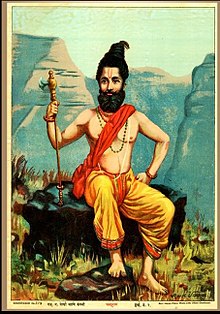
Wishing everyone BHAGWAN PARSHURAM JAYANTI


अग्रत: चतुरो वेदा: पृष्‍ठत: सशरं धनु: ।
इदं ब्राह्मं इदं क्षात्रं शापादपि शरादपि ।।


Parshuram who is well-versed with the four Vedas and sports the bow and arrow upon His back (that is the one who has the radiance of both the Brahman and the Kshatriya) will destroy evildoers either with a curse or with an arrow.


Today is AKSHAY TRITYA an auspicious day, as it is the day when BHAGWAN PARSHURAM JI THE GREAT took birth.


BHAGWAN PARSHURAM ji was son of RISHI JAMADAGNI and RENUKA maa and belongs to bhrigu gotr clan.


The  BHAGWAN was a perfect BRAHMAN, as brahman is supposed to be both, a scholar as well as a warrior. He possessed all the knowledge of the shashtra, and also, knew all the war fare techniques. 


Parashuram means RAM with an AXE, the LORD did tapasya of LORD SHIVA, who then blessed him with this divine weapon or DIVYA ASTRA.

                                                      
BHAGWAN PARASHURAM was the guide or guru of DRONA ACHARYA THE GREAT, aryan warlord BHISHMA, and taught krana also, even though he lied to the LORD that he is brahman.

In  the area konkan, udupi, kerala, or collectively, known as PARASHURAM KSHETRA, BHAGWAN installed brahmans there, these brahmans are known as namboodiri, konkanstha, and kota brahmins, who are rig vedi.

It is sad to see that now, akshay tritya in india is celebrated by selling gold, where as, BHAGWAN himself fought in order to restore VEDIC CIVLIZATION, and he held an axe made of iron, and wore a deer skin, which is totally unrelated to gold etc. This is the reason that why hinduism is falling down, as now, hindus have given ways to those life style which RISHIS have said no to.

Let all BRAHMANS TAKE A VOW THAT WE WILL FOLLOW THE FOOT STEP OF OUR BHAGWAN PARASHURAM and revive our glory and be the VISHWA GURU of this world.

With this, I will end by saying:

                                             II JAI BHAGWAN PARASHURAM II

                                                  Parashurama with axe.jpg


Wednesday, April 23, 2014

BMOSC's first PROTOTYPE - Short Range Motion Detector

Hello,


I am feeling proud to share a work with all of you, which manoj varma and me had made.

This can be considered as the first prototype of THE BMOSC, under the DIY category.

We tried to integrate a motion sensor PIR and an ultrasonic sensor HR-SC04.

Will be posting the schematics, sketch and test cases, which we had done.


Ideas Meet Makers - Maker Event hosted at BOSCH DIY SQUARE

Hello There,


The BMOSC hosted a maker day event at BOSCH DIY SQUARE, of which I was the in charge.

The goal of the event was to bring together the DIY enthusiast in the city of Bangalore,meet with each other,
brainstorm on the ideas, share the knowledge and most importantly, make something.

Even though, the total number of people who turned was not that great, as there were only five of us along with the host Deepak Mulajkar, which makes the tally as  six, the quality of the event is something which can be talked about.

This time, we decided that we will not go with slide deck,speakers or any talk sessions, as our goal was to promote the culture of MAKING. And I think, we were quite successful in this, even though, the full day of making was not achieved, but still, more than 50% of the time allotted for the event went into Making.

The positive point which I will take from this event was that, first and foremost, my own personality has shaped up a bit, I have learned quite a few number of things, I met wonderful people, and trust me, the world is filled with good people out there, who are really willing to help others, and they don't differentiate whether one knows English language ,how do they dress, or what their age. There main motive was to keep the spirit of the MAKER CULTURE alive, and all 6 of us just did that.

People brought and showcased robots made out of Lego blocks, which has a Raspberry PI and another microcontroller attached to it. We played with lot of other electronics times, hooked up motors, built an alarm with a speaker attached to it which irritates everyone and other stuff.

These are the pics of the event:


MakerDay Event, Starting from left: Mahesh Shivaraj S, Karimulla Naik, Radhakrishn Lambu, Mahesh Venkitachalam, Deepak Mulajkar, Raviprakash Jayaraman


Raviprakash Jayaraman, Radhakrishn Lambu, Karimulla Naik and Deepak at the maker event at Bosch Square.


Mahesh Shivaraj S, Radhakrishn Lambu and Karimulla Naik at the Maker event at Bosch DIY square.


Mahesh Shivraj and Radhakrishn Rao Lambu


I would like to thanks Ms Kavita Arora, who is the founder and CEO  of THE BMOSC, Mr  Manoj Varma,Mr Bharadwaaj Ramarkishnan for their valuable contribution to curate this event, Mr Deepak Muljakar for providing us the wonderful venue,BOSCH DIY Square, Mr JayTirth Ahya, for making the poster of this event. 


I will conclude by saying that even though the total amount of MAKERS who turned up on this day was quite low, but overall, I am really satisfied that I did organize this event and and everyone had fun.

With this, I will end.

Thanks everyone and Have a nice day.


Tuesday, April 15, 2014

SHUBANSHI HANUMAN JAYANTI


Wishing everyone HANUMAN JAYANTI!!!

Today is HANUMAN JAYANTI. Hanuman is son of PAVAN and anjani maata, that's why he is also known as ANJANEYA.

LORD HANUMAN plays a significant role in the RAMAYAN. He was friend of sugriva, king of the KISHKINDHA KINGDOM, and used to assist him in managing the kingdom. In the battle, he kills

LORD HANUMAN was an ardent bhakt of SREE RAM, and always helped him in his task. His devotion and loyalty to his MASTER LORD RAM is something which all of us must look upto, because, so much devoted was he to LORD RAM, that he once started piercing the necklace of MAA SITA, which she gave to him. When questioned by VIBHISHANA/SUGRIVA (AUTHENTICITY NEEDS TO BE CHECKED) that why are you breaking such costly affair, the MAHAVIR says that for him, all those objects are worthless in which HIS SHREE RAM does not reside. On hearing this, VIBHISHANA/SUGRIVA asks, what about your own body? Then he pierces his own heart, and everyone gets to see that HANUMAN IS PARAM BHAKT of SHREE RAM, and his devotion is unparalleled.

LORD RAM has kept HANUMAN CHIRANJEEVI, in order to fight the evil and make sure that PRITHVI is not completely sinful.

LORD HANUMAN IS EPITOME of Bal, Buddhi, Vidya. It is apparent, while he was on his way to lanka, he is stopped in between. The demon tries to test his charachter, on which, hanuman never lost his common sense. He resizes himself, steps inside the mouth of the demon, and comes back immediatly. Due to this act, the demon also becomes SHRAP MUKT.

Similarly, Ravan orders one of his soldier to set HANUMAN' Tail on fire, HANUMAN uses logic, and puts the entire lanka on fire, due to which, the city comes into inflration, and major infrastructure gets destroyed.

Another instance states about his selfless character.After the victory of Rama over Ravana, Hanuman went to the Himalayas to continue his worship of the Lord Rama. There he scripted a version of the Ramayana on the Himalayan mountains using his nails, recording every detail of Rama's deeds. When Maharishi Valmiki visited him to show him his own version of the Ramayana, he saw Hanuman's version and became very disappointed. When Hanuman asked Valmiki the cause of his sorrow, the sage said that his version, which he had created very laboriously, was no match for the splendour of Hanuman's, and would therefore go ignored. At this, Hanuman discarded his own version, which is called the Hanumad Ramayana. Maharishi Valmiki was so taken aback that he said he would take another birth to sing the glory of Hanuman which he had understated in his version.

Let us all chant together: JAI BAJRANG BALI